|
CENOTE
In the Yucatan peninsula there is little surface water. For over 3000
years, cenotes and caves were primary water sources for the Maya, and
therefore essential to their survival. Naturally acidic groundwater seeps
through cracks in the limestone bedrock dissolving areas of softer rock
that lie beneath the hard surface crust. Over time, this process creates
large undergound caverns roofed with only a thin layer of surface limestone.
As erosion continues, this thin roof eventually collapses, leaving an
open, water-filled hole. Through a collapsed roof of a cave, rainwater
can flow to join an underground drainage system. To the Maya cenotes were
sacred space. Caves were sources of drinking water, sources of "virgin"
water for religious rites, burial and/or sacrificial sites, places of
refuge, and mines for clay or minerals.
Cenote Dzit Nup, outside of Mérida, is a trollish version of a
Gothic cathedral. Stalactites and stalagmites, lit by the water’s
reflection, bounce light like an underground disco ball. In 1988, when
I first traveled to the Yucatan with Macduff Everton, my husband-to-be,
Dzit Nup was still relatively unknown to outsiders. A solitary old man
resting in the shade waved us on as we carefully descended over slippery
stone and mud into the cave. I knew that I had entered a numinous space
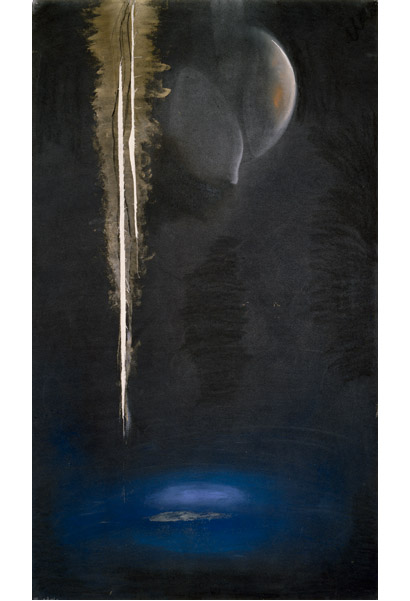
and I came away with an image that inspired this series of 20 velvety
charcoal drawings
Sacred ‘sites’ are inextricable with ‘sights’,
the former exists outside time and the latter is totally dependent on
time. When I returned in 2000 Dzit Nup had turned into a major attraction,
a raucous public swimming pool where huipil vendors, ticket takers and
food stands ringed an enormous parking lot. A happy, family-friendly place.
But, had this been my first experience of a cenote, those paintings would
never have happened. What was there before is gone.
My first impressions are below.
Descending into the mouth of a dimly lit cave,
I hear swallows and bats and the dripping of water as my eyes adjust to
the cool light. A pool the size of a small pond shimmers an unnamable
color of blue and depth. Some cenotes sink over 300 feet deep into the
earth.
Overhead, the limestone dome is punctured by a bright chunk of sky. I
enter the cool, still water and float in the pool until I drift beneath
this well opening, seventy feet above. It is an eye to the outside world,
the sun is its pupil, and the opalescent rain clouds gather up into a
cornea.
At midday, sunlight spills a bright shaft of itself
onto the center of the dark pool. A circle of ultramarine light hovers
just above the translucent turquoise water - an optical illusion that
beckons. Outside this halo, the blue water deepens to a rich indigo of
womblike darkness.
The CENOTE series is really quite literal. Nascent shapes emerge from
a soot black surface through erasure. Strips of torn canvas liken the
tangled dangling root systems, harbingers from the world above, and the
metallic splashes and pastel tones are my way of chasing after an illusion
of blue in the dark.
back to Organic Abstractions |
|
|